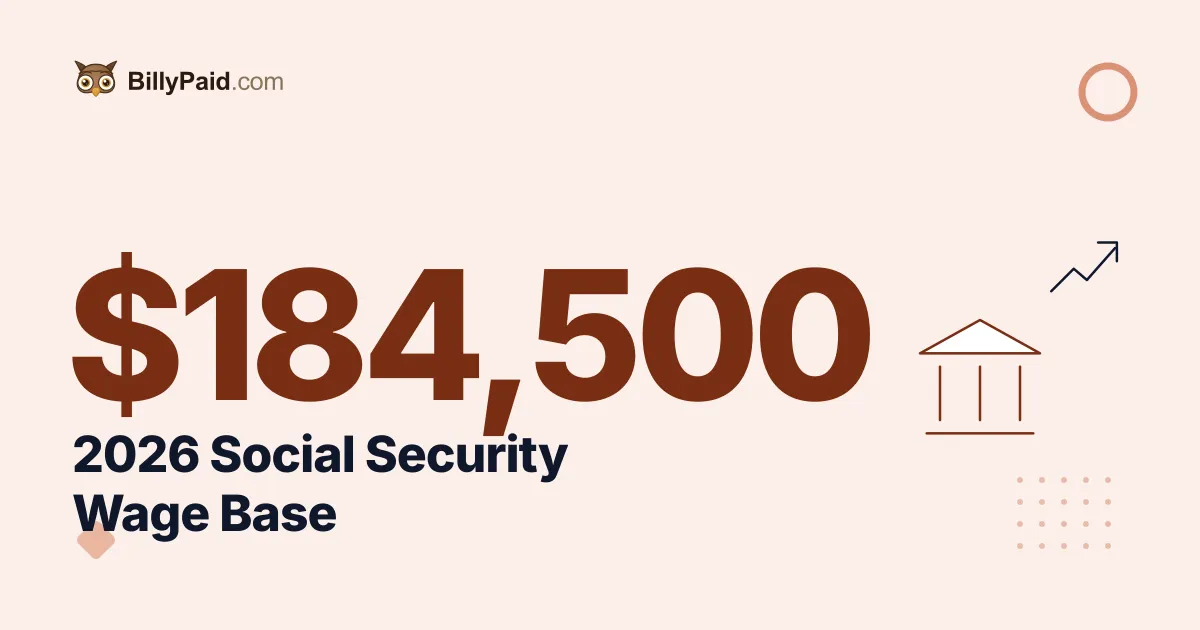
The Social Security Administration set the 2026 wage base at $184,500, up from $176,100 in 2025. If you are self-employed, that number is the ceiling on the 12.4% Social Security portion of your self-employment tax. Net income up to $184,500 gets taxed at that rate this year, instead of stopping at last year’s lower cap.
It is a routine annual adjustment, tied to national wage growth. But if your net self-employment income sits anywhere near the old ceiling, the jump changes the math on what you owe, and when.
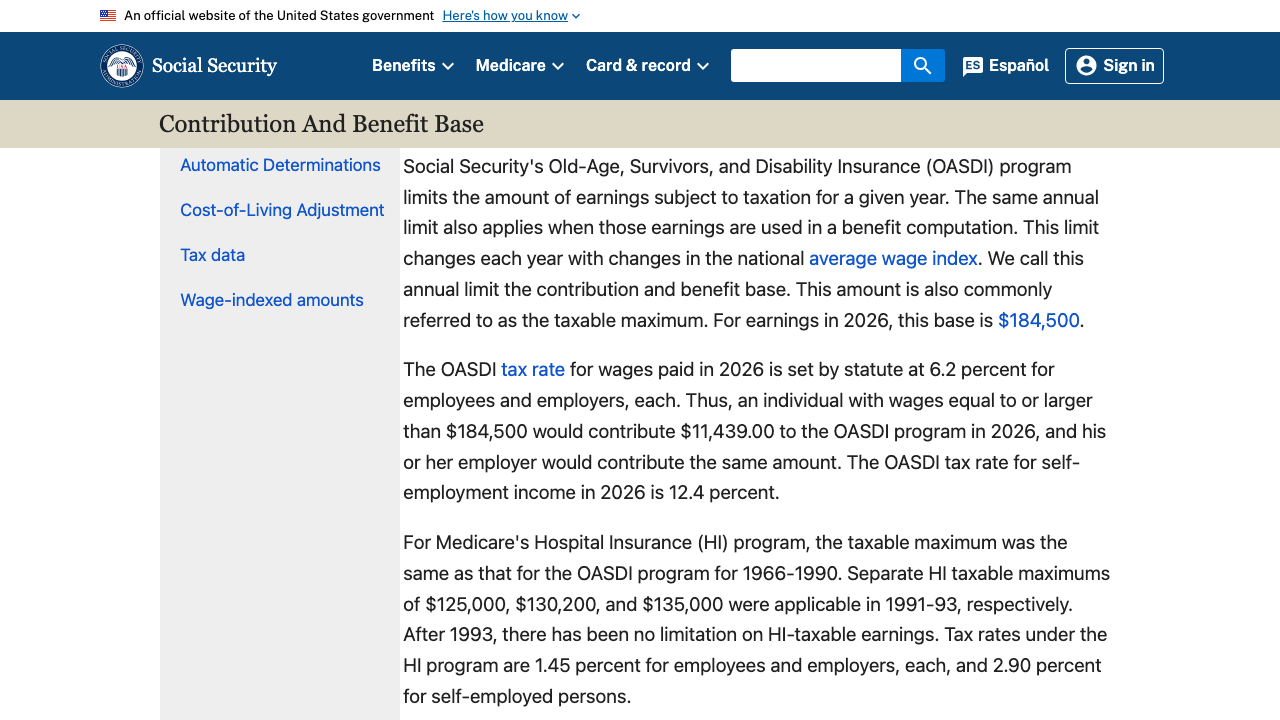
The Social Security Administration’s own contribution and benefit base page confirms the new figure directly.
What the wage base caps
Self-employment tax, sometimes called SECA, has two parts. Social Security is 12.4% of net self-employment income, up to the wage base. Medicare is 2.9%, and it has no ceiling at all. Above $200,000 for most single filers ($250,000 married filing jointly), an Additional Medicare Tax of 0.9% kicks in on top of that.
Figure 1: The Social Security wage base rose from $176,100 in 2025 to $184,500 in 2026. Source: Social Security Administration.
At the new ceiling, the maximum Social Security tax a self-employed person can owe is $22,878, up from roughly $21,836 at last year’s cap. You can deduct half of your total SECA tax as an adjustment to income, which softens the hit but does not change what you owe upfront through the year.
| 2025 | 2026 | |
|---|---|---|
| Social Security wage base | $176,100 | $184,500 |
| Max Social Security tax (12.4%) | $21,836 | $22,878 |
| Medicare tax rate | 2.9%, no cap | 2.9%, no cap |
Who feels this
If your net self-employment income is well under $176,100, the new cap changes nothing for you. Every dollar you earn was already taxed at 12.4% for Social Security, and it still is. The ceiling only matters once your income approaches or clears it.
The people affected are established freelancers, consultants, and small agency owners with net income in the high five or low six figures. For them, a wider slice of 2026 income is now subject to the 12.4% rate before hitting the cap, compared to where the cap sat last year. If you were budgeting quarterly payments off last year’s numbers, that assumption is out of date.
Figure 2: At the new $184,500 ceiling, the maximum Social Security portion of SECA tax is $22,878. The 2.9% Medicare portion keeps applying above that with no cap. Source: Social Security Administration.
Why guessing your income is the real risk
None of this math works if you do not know your real year-to-date net self-employment income. Quarterly estimated tax payments are supposed to track what you have earned and collected, not a rough guess pulled together in April. A freelancer who is estimating from memory, rather than pulling numbers from real invoices and recorded payments, is the one most likely to misjudge where they land against the new $184,500 threshold and end up short.
The fix is not more complicated math. It is knowing your real numbers as you go. Every invoice you send and every payment a client makes should be sitting in one place you can total up in a minute, not scattered across emails and bank statements you have to reconstruct at tax time.
A BillyPaid receipt gets generated automatically the moment a client pays, so your record of what came in stays accurate without extra work on your part, right when you need it to run the numbers correctly.
![How Small Businesses Prefer to Get Paid [2026 Data]](/_astro/how-small-businesses-prefer-to-get-paid-2026.YCaeH9Cw_sETpX.webp)
![Small Business Payment Method 2026: 26% Still Pay by Check [Data]](/_astro/small-business-payment-method-statistics-2026.CVRcTZ0T_Z28I3VD.webp)
![Duplicate Payment 2026 [Full Data Report]](/_astro/duplicate-payment-statistics-2026.Bw7v68Ma_Z2wyPsj.webp)