A client tells you the check is in the mail, and for a lot of freelancers that still sounds like a normal way to get paid. It shouldn’t. The US Postal Service renewed its public warnings this year about check washing from blue collection boxes, and the numbers behind that warning explain exactly why a mailed check is one of the weakest links in how you get paid.
How check washing actually works
Check washing is chemical, not digital. Someone steals a check out of a mailbox or collection box, uses solvents to erase the ink while leaving the signature intact, then rewrites the payee and the amount before depositing it. The bank sees a validly signed check and has no easy way to know it has been altered. USPS officials specifically flagged blue collection boxes as a target this year, urging customers to drop checks inside a post office or hand them to a carrier directly rather than leaving them in a box.
Mail theft from collection receptacles surged 139% between 2019 and 2023, and the losses attached to it are not small. Mail theft and check fraud combined are estimated to have cost $21 billion in 2023 alone.
Most of it never gets reported
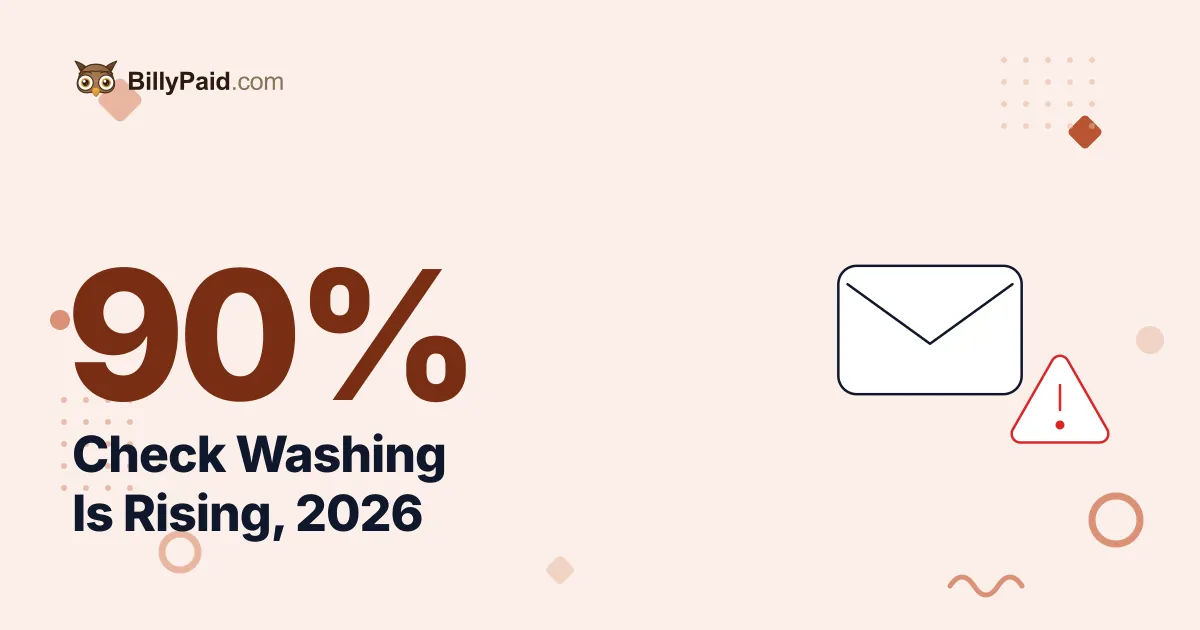
An estimated 90% of mail theft and check fraud incidents go unreported. Source: FinCEN threat pattern analysis; USPS public advisories, 2026.
That underreporting rate matters for how you think about risk. The visible numbers, large as they are, likely understate how often a check gets intercepted and altered before it reaches its intended recipient. If you are a freelancer who invoices a handful of clients a check at a time, the odds that one of those checks passes through a compromised mailbox at some point are higher than the headline statistics suggest.
What check washing actually costs you
If a check you were owed gets washed and cashed by someone else, the money did not simply arrive late. It went to a criminal, and recovering it is a slow process that runs through your bank’s fraud department, not a quick follow-up email to your client. Meanwhile, your client may believe they already paid you, since their bank shows the check as cashed. Untangling that is a dispute you did not sign up for on top of work you already delivered.
A payment link removes the mailbox from the equation entirely
None of this requires convincing every client to change how they run their business. It requires giving them an option that skips the mailbox altogether. A BillyPaid payment link attached to your invoice lets a client pay directly by card or bank transfer the moment they open it, with no check to write, no envelope to drop in a box, and no window of time where a piece of paper with your name on it sits somewhere a thief can reach it.