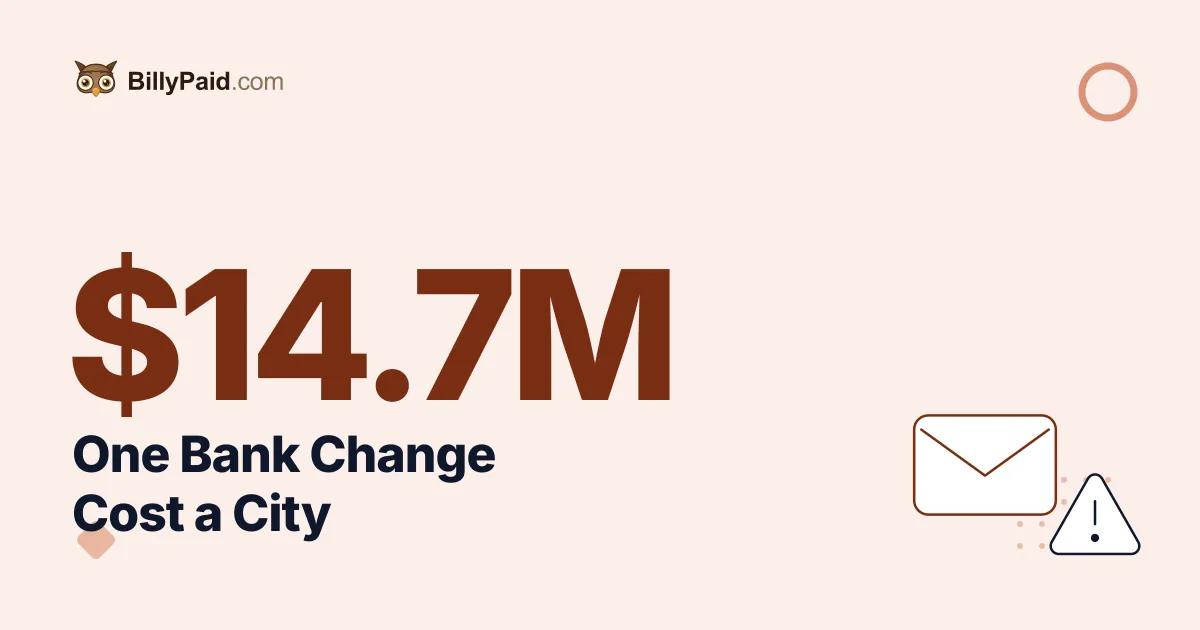
The City of Mobile, Alabama lost $14.7 million in a single wire transfer for construction of Regions Arena. According to FOX10 News, the mayor discussed the loss publicly on October 21, and the FBI is investigating. According to the city’s account, the request involved changing a company’s banking information.
The request came months before the money moved
Per FOX10’s follow-up report, someone posing as a representative of B.L. Harbert International, the contractor building the arena, contacted the city in late May and asked the Finance Department to take note of the company’s banking information.
Over the following months, the fraudster built rapport with city employees. Officials said one employee was persuaded to send a legitimate invoice from the real company to the con artist. The city’s executive director of finance told council members, “That is what established the legitimacy.”
City officials processed the payment on October 2. The mayor described it this way: “The payment itself was fairly routine. The only difference was where it was going.”
The real contractor noticed before the city did
The real B.L. Harbert asked on October 7 why it had not been paid, then followed up on October 13. The finance director found on October 16 that the money was gone. That is 14 days from payment to discovery.
Time matters because recovery windows are short. Darren Mott, a former FBI supervisory special agent quoted by FOX10, put it bluntly: “You need to do it within three days, basically.” The mayor said a different group targeted the city in August, and employees discovered within two days that funds had gone to a false account. The city recovered that money.
Your clients face the same trap in reverse
A city has an accounts payable department. You have an inbox. The attack works the same way on you, with one twist: the fraudster may impersonate you to your client, or impersonate your client to you.
On October 28, the Better Business Bureau of Central and South Alabama warned, as reported by NBC 15, that the same kind of email scam is targeting other Alabama businesses. Its advice was to verify any payment changes by calling vendors at phone numbers they already have on file, not numbers in an email.
That advice protects the payer. As the payee, you can make it easier for your clients to follow by telling them in advance how you will behave.
Publish a bank-change policy before anyone asks
A fraudster’s best asset is a client who has no idea what is normal for you. Fix that with a short policy you put on every invoice, proposal, and onboarding email.
| Situation | What your policy says |
|---|---|
| You need to change your bank details | You will call your client on a number they already have, and confirm in writing from your known address |
| A message claims to be you and asks for new details | Do not act on it, and phone you directly |
| An invoice arrives with details that differ from the last one | Hold payment until the call is done |
| A rushed request that cannot wait for a call | Treat it as suspect, not urgent |
Two lines are enough, for example: “My bank details are printed on every invoice. I will never change them by email alone. If you receive a change request, call me first.”
Keep your details in one place your clients already trust
The Mobile case turned on a legitimate invoice. That invoice made the fake request look real, because anyone who sees one real document tends to trust the next. So keep a single, consistent source of truth. Put your payment details in the same spot on every invoice, send invoices from the same address, and never rotate them without the phone call.
If a client asks “did your details change?”, the answer should be on the invoice they are already holding. That consistency is what lets them spot a request that does not match.
For anyone paying vendors, the Mobile mayor said the city tightened controls after the loss, including no longer wiring or electronically transmitting payments of that size. His rule of thumb, as quoted by FOX10: “If a check has two commas in it, it needs to be a check hand-delivered.” The lesson for freelancers is smaller but the same shape. A bank change is a high-risk event, so it gets a slower, separate channel.
If you want your payment details printed consistently on every invoice you send, start with a BillyPaid invoice.