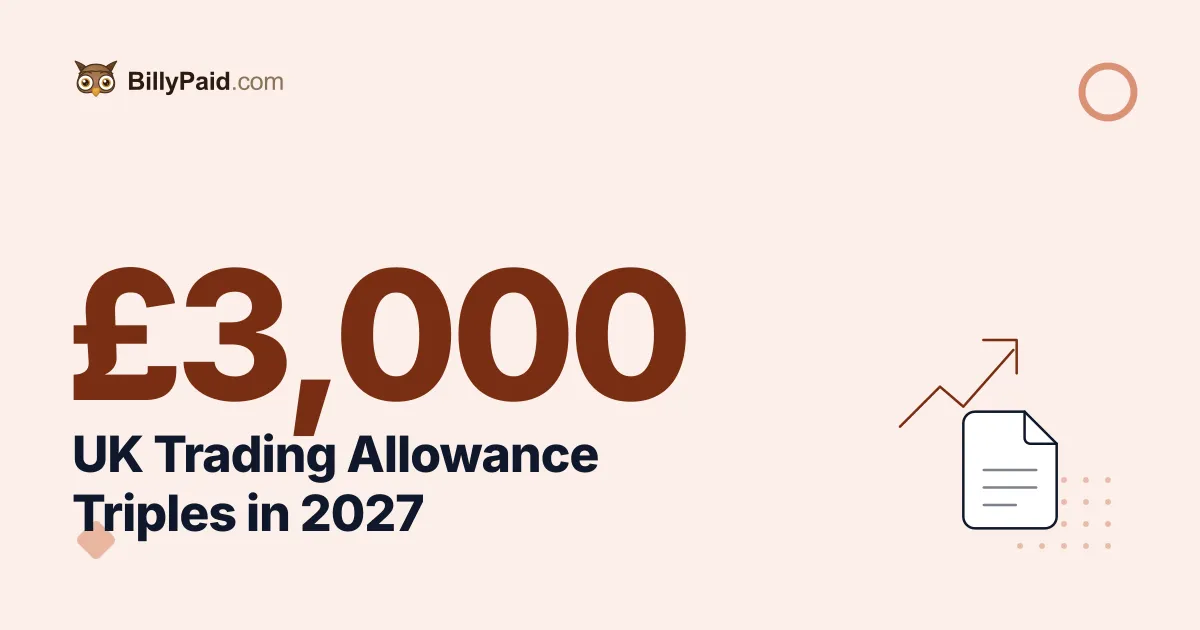
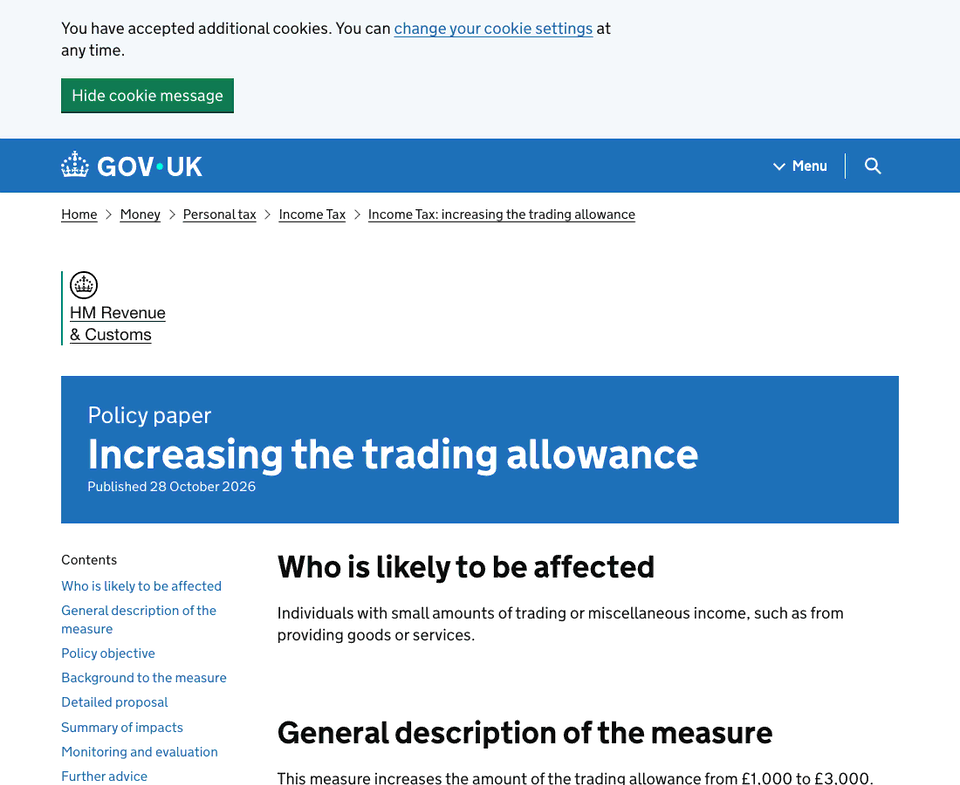
On 28 October 2026, the UK government published its Autumn Budget 2026 plan to increase the trading allowance from £1,000 to £3,000. According to the gov.uk policy paper on increasing the trading allowance, the measure takes effect on 6 April 2027, for the 2027 to 2028 tax year onwards. If you freelance in the UK on the side, or earn small amounts from trading, this changes how much of your income HMRC taxes. It does not change whether you need to keep your invoices.
This is announced policy, not law yet
The same gov.uk paper says legislation in the Finance Bill 2026-27 will change the current law. Until that bill passes, the £3,000 figure is a plan. Accountancy firm Apex Accountants describes it the same way, saying the government plans the increase “subject to legislation.”
For the 2026 to 2027 tax year, which ends on 5 April 2027, the existing £1,000 allowance still applies. Do not plan your current year around the new figure.
The Self Assessment reporting threshold rises with it
The gov.uk paper says the trading allowance increase also raises the Self Assessment reporting threshold for trading income to £3,000. Today, gov.uk’s guidance on tax-free allowances says that if your gross trading income is £1,000 or less, you generally do not need to tell HMRC. Above £1,000, you must register for Self Assessment and declare the income.
The government’s own estimates, in the same paper, put the scale at up to 1.4 million individuals who could potentially benefit. It estimates 400,000 people would see a tax bill reduction of £380 on average, and 100,000 would no longer need to report their trading income to HMRC.
The allowance and your expenses are still an either/or choice
Per the gov.uk guidance, if your gross trading income is over £1,000 you can use the allowance instead of deducting expenses. If your expenses are higher than your income, claiming actual expenses may work out better. The guidance describes partial relief as deducting up to the allowance from your income, never more than the income itself.
The Budget paper does not describe any change to that choice, so it is reasonable to expect the same logic at a higher number. Check the final legislation before assuming it.
| Situation | Allowance route | Expenses route |
|---|---|---|
| Income under the allowance | Fully covered, no tax due | Not needed |
| Income above, few costs | Deduct the allowance from income | Usually worse |
| Income above, high costs | Deduct the allowance from income | May work out better |
You still have to keep records of the income
The gov.uk guidance is direct on this point: if you use the trading allowance, you must keep a record of your income, such as invoices, bank statements, or a spreadsheet of receipts. HMRC can charge a penalty if your records are inaccurate, incomplete, unreadable, or not kept for the required period.
A higher allowance means fewer people owe tax on small side income. It does not remove the record keeping duty. If a client disputes a payment, or HMRC asks how you reached a total, a dated invoice is still the cleanest answer.
Making Tax Digital is a separate track
Do not mix this up with Making Tax Digital for Income Tax. FreeAgent’s Autumn Budget 2026 summary says the next wave of Making Tax Digital goes ahead as planned for self-employed people and landlords who earned over the £30,000 threshold in 2025/26, from April 2027. Apex Accountants adds that quarterly updates are still required, though the first four quarters of 2027/28 will not receive late submission penalty points.
The trading allowance concerns small amounts of trading income. The Making Tax Digital wave described there concerns larger earners. Most people with side income close to £3,000 will not be in that group.
What to do between now and April
Keep invoicing exactly as you do today. Number each invoice, date it, and record what you were paid and when. The tax year starting on 6 April 2027 will be the first one where the higher allowance applies, so that is the year to watch your running total against £3,000.
If your invoices already live in one place, a BillyPaid invoice keeps that record dated and in order, so your year-to-date income is a lookup, not a reconstruction.